Showing posts with label softpower. Show all posts

Wednesday, 18 April 2018

Reformasi, Antikorupsi, dan Perkembangan Sepakbola di Tiongkok

Dalam beberapa tahun terakhir, banyak pihak yang melihat dengan takjub perkembangan sepakbola di Tiongkok. Saya masih ingat 10 tahun lalu, ketika saya pertama kali tinggal di Beijing, dan sering bermain dengan teman-teman dari Amerika Latin. Di lapangan sebelah tempat kita bermain biasanya juga diisi pemain asing. Tapi sekarang, lapangan bola di Beijing selalu dipenuhi masyarakat lokal. Dan jumlah lapangannya pun telah bertambah berkali lipat.

Belum lagi berita-berita terbaru mengenai pemain-pemain asing yang berkiprah di Chinese Super League. Bahkan tim favorit saya, FC Barcelona pun menemukan Paulinho di Guangzhou Evergrande untuk mengisi kekosongan yang ditinggalkan Neymar Jr. Dan ternyata, Paulinho jauh lebih hebat dari yang diharapkan, walaupun memang sangat sulit menggantikan seorang Neymar Jr. Setidaknya, pembelian Paulinho dari Guangzhou menunjukkan bahwa tingkat permainan di CSL sudah menjadi perhatian tim-tim di Eropa.
 
Nah, dalam artikel ini, saya ingin sedikit berbagi mengenai sepakbola di Tiongkok.
 
Sebagaimana organisasi-organisasi lain di Tiongkok, China Football Association (CFA) berada di bawah kendali pemerintahan. Secara spesifik, CFA berada di bawah naungan State General Administration of Sports, yang di Indonesia setara dengan Kementerian Pemuda dan Olahraga. FIFA mentolerir hal tersebut mengingat bentuk pemerintahan di Tiongkok, di mana segala aspek kehidupan penduduk dikontrol dan diawasi oleh Pemerintah.
 
CSL dibentuk pada tahun 2004 sebagai liga tertinggi sepakbola di Tiongkok untuk menggantikan Jia A League. Pembentukan CSL utamanya dikarenakan kegagalan Tiongkok pada Piala Dunia 2002 di Jepang-Korea, di mana Timnas Tiongkok kalah tiga kali dan tidak menghasilkan satu gol pun sepanjang turnamen.
 
Untuk dapat berpartisipasi dalam CSL, para tim diharuskan mempunyai manajemen yang professional, keuangan yang transparan, dan youth program yang dapat menghasilkan pemain-pemain lokal. Persayaratan-persyaratan ini diharapkan dapat mengangkat kualitas sepakbola di Tiongkok secara umum.
Namun demikian, upaya tersebut tidak membuahkan hasil yang diharapkan karena semakin banyaknya uang yang mengalir ke CSL justru membuat kompetisi semakin diwarnai kasus-kasus korupsi. Korupsi dan sogok-menyogok seringnya dilakukan oleh pejabat-pejabat daerah. Beberapa tindakan ilegal yang merusak citra CSL termasuk:
  • Maraknya perjudian, terutama yang dilakukan oleh para pejabat lokal
  • Pengaturan skor oleh pemilik klub, terutama untuk menguntungkan pejabat-pejabat lokal
  • Sogok-menyogok untuk dapat mengirim pemain klub ke Timnas Tiongkok, yang sering dilakukan oleh pemilik tim lokal guna meningkatkan pamor klub.
Kasus korupsi dan sogok biasanya melibatkan pemain (utamanya para pemain bek dan kiper) atau pelatih. Hal ini dikarenakan gaji pemain dan wasit yang sangat rendah. Pelatih klub biasanya tidak tahu-menahu, dan sering menjadi pihak yang dirugikan karena kelakuan pemain dan wasit.
 
Dampak dari keterpurukan pesepakbolaan di Tiongkok adalah menurunnya interest masyarakat Tiongkok untuk bermain atau menonton sepakbola professional di negara mereka sendiri. Berbagai kegagalan Timnas Tiongkok juga menjadi bahan cemoohan masyarakat, yang tidak percaya bahwa dari 1,3 milyar penduduk Tiongkok tidak dapat dicari 11 orang untuk bermain sepakbola yang kompetitif, setidaknya di Asia.
 
Kondisi yang buruk ini mencapai titik nadir pada tahun 2009, ketika pemain-pemain Qingdao Hailifeng “tidak berhasil” membiarkan lawannya menang lebih dari empat gol. Kegagalan ini dikatakan akhirnya menyebabkan pemilik klub Qingdao Hailifeng rugi judi besar-besaran.
 
Melihat kondisi ini, akhirnya Pemerintah Pusat bertekad untuk memberikan perhatian lebih terhadap CFA dan CSL, dan melakukan reformasi internal yang progresif dan disiplin. Upaya ini secara individu dimulai oleh Presiden Xi Jinping, yang pada waktu itu masih menjabat sebagai Wakil Presiden RRT. Xi Jinping adalah penggemar sepakbola dan telah mengarahlan agar berbagai upaya sejak tahun 2009 dapat mempersiapkan kondisi yang kondusif untuk pengembangan sepakbola di Tiongkok pada saat Xi Jinping nantinya menjadi Presiden RRT.
 
Dengan tekad ini, maka dimulailah kampanye anti-korupsi di CFA dan CSL. Saat berkunjung ke Jerman pada tahun 2009, Xi Jinping mengatakan bahwa sepakbola di Tiongkok harus menjadi sumber kebanggaan nasional. Dua minggu kemudian, 16 pejabat CFA dan CSL serta pemain klub ditangkap polisi karena terbukti menerima atau memberikan sogokan.
 
Kampanye anti-korupsi di tubuh CFA dan CSL berlangsung dari 2009 sampai dengan 2012. Dalam periode tersebut, setidaknya 58 pejabat CFA dan CSL ditangkap dan dijatuhkan hukuman sampai dengan 10 tahun penjara. Beberapa pejabat termasuk dua orang mantan Ketua CFA, beberapa pemain Timnas Tiongkok ternama, dan seorang wasit di Tiongkok yang paling terkenal.
 
Kampanye anti-korupsi dilakukan baik oleh Pemerintah (melalui Kementerian Supervisi) maupun Partai Komunis Tiongkok (PKT). Hal ini dapat dilakukan karena segenap pejabat CFA dan CSL adalah pegawai pemerintahan dan fungsionaris PKT.
 
Sambil dilakukannya kampanye anti-korupsi, Pemerintah RRT juga mendorong partisipasi perusahaan-perusahaan swasta untuk mendanai klub-klub CSL. Perusahaan-perusahaan yang menanggapi dorongan Pemerintah termasuk Alibaba Group (sponsor utama Guangzhou Evergrande FC), Suning (perusahaan peralatan elektronik terbesar di Tiongkok, sponsor utama Jiangsu Sainty FC), dan SIPG (perusahaan manajemen pelabuhan, sponsor utama Shanghai Shanggang FC). 
 
Klub-klub juga melakukan pendekatan kepada masyarakat lokal, termasuk dengan menciptakan merchandising yang bagus, memudahkan pembelian tiket masuk, dan melakukan berbagai program kemasyarakatan. Dukungan para fans lokal menjadi salah satu tumpuan sumber keuangan bagi setiap klub. Secara umum, jumlah fans yang mengunjungi stadion setiap harinya meningkat. Begitu juga dengan jumlah yang menonton pertandingan-pertandingan via tv dari rumah.
 
Setelah menjadi Presiden RRT, Xi Jinping meneruskan niatnya untuk membenahi sepakbola di Tiongkok dengan menjadikan isu ini sebagai salah satu isu yang dibahas pada saat kongres nasional tahun 2013. Dalam pidatonya di hadapan para anggota National People’s Congress (NPC), Presiden Xi manyampaikan bahwa revitalisasi sepakbola di Tiongkok akan menjadikan Tiongkok sebagai negara olahraga yang kuat, yang merupakan bagian inti dari pencapaian China Dream yang dia visikan.
 
Pada tahun 2015, akhirnya NPC mengeluarkan 50-Point Plan terkait dengan revitalisasi sepakbola di Tiongkok. Beberapa target kunci adalah:
  • Meningkatkan profesionalitas klub-klub CSL, dengan mendorong partisipasi perusahaan-perusahaan lokal dari berbagai bidang usaha sebagai sponsor klub
  • Menciptakan basis yang kuat bagi pengembangan sepakbola dengan memberdayakan organisasi-organisasi sepakbola di tingkat grassroots serta sekolah-sekolah sepakbola
  • Meningkatkan jumlah anak-anak di Tiongkok yang bermain sepakbola
  • Membuka sekolah-sekolah sepakbola baru, yang jumlahnya diharapkan mencapai 20 ribu pada tahun 2020 dan 50 ribu pada than 2025 (saat ini jumlahnya masih 5 ribu)
  • Mengucurkan dana ke sistem pendidikan agar menjadikan sepakbola sebagai salah program kurikulum pendidikan nasional
  • Terus meningkatkan program anti-korupsi di CFA dan CSL, yang sejalan dengan kampanye anti-korupsi yang gencar dilakukan di berbagai tingkatan pemerintahan di Tiongkok saat ini
  • Menciptakan kondisi yang kondusif untuk menarik kedatangan pemain-pemain dan pelatih-pelatih asing yang berkualitas
Reformasi dan revitalisasi CFA dan CSL juga akan dilakukan dengan secara pelan-pelan menjadikan CFA independen dari Pemerintah (sebagaimana harapan FIFA selama ini). Diharapkan CFA dan CSL nantinya akan diisi dengan professional dan berorientasikan bisnis. Artinya, CSL dan masing-masing klub anggotanya akan di-manage bagaikan perusahaan, dan harus untung secara finansial.
 
Selain itu, Pemerintah RRT juga telah mengundang IMG Worldwide Inc untuk me-manage CSL secara professional. Pemerintah Pusat masih mengawasi CFA dan CSL, tetapi keberadaan pejabat-pejabat pemerintahan dan PKT semakin dikurangi. 
 
Tiga target jangka panjang 50 Point Plan di bidang sepakbola yang diinisiasi Presiden Xi Jinping adalah: 1) membentuk basis yang kokoh bagi pengembangan Timnas Tiongkok yang kompetitif di ajang internasional, dan dapat masuk ke putaran final Piala Dunia; 2) menjadi tuan rumah Piala Dunia; dan 3) menjadi salah satu kandidat juara Piala Dunia
 

Thursday, 9 July 2015

Bandung Creative City: Reinvigorating the Capital of Asia-Africa


On 17 April 2015, I was invited by The Global Times, one of China's leading English-language newspapers, to speak at their annual Global Ambassador Forum.  Of course I was delighted to receive the invitation, especially because I am not ambassador.  So, I accepted the invitation in a heartbeat.

The topic of the forum was "Building Smart and Green Cities", something that I immediately realized I had no idea about.  But I have always been told by a senior colleague that when given a chance to speak, then speak.  Because speaking gets Indonesia's name on newspapers (for the right reasons), and that's part of what our job is.

The words of that senior colleague do make sense.  At least, more so than the advise of another older diplomat, who once belittled me, and said that I shouldn't speak at a forum promoting Indonesia's movie industry because I "didn't have the competency to speak about such matters".  What nonsense, I thought, and still do 'til this day.

I will take the risk of appearing cocky and assert the believe that I am an authority in Indonesian matters, here in Beijing, China.  And this is not simply because I've entertained one too many questions from Chinese people about things Indonesian.  If anything, I believe that every diplomat should have it in his hearts and minds that he or she is an Indonesian resource person wherever they are posted. Not only competent, but an authority on Indonesia.

And so, it didn't take long for me to decide on Bandung as my topic of discussion for the Global Ambassador Forum.  The choice was somewhat easy.  I've been to Bandung many times.  Bandung is increasingly becoming known for its "smart" and "green" urban development.  Bandung was also about to host the 60th Anniversary of the Asia-Africa Summit, and many in Beijing knew little about Bandung. 

Indeed, following the forum, I was interviewed by three Chinese media that wanted to do a background story for the Asia-Africa Summit.  In fact, one of the publications resulting from these interviews can still be found on the website of East China News Service (ECNS.COM).

In case some of you are interested in what I said during the Global Ambassador Forum, please continue reading below.

-----

Excellencies Ambassadors,
Respected members of the diplomatic corps,
Esteemed editors and journalists of Global Times,
Ladies and gentlemen,

First and foremost, I would like to thank Global Times for inviting me to speak at this forum. 

I am a loyal reader of Global Times, and therefore, it is indeed an honour for me to be here, and to talk about my country, Indonesia.

In all honesty, I am not an expert in urban development.  Nor am I an architect or landscape designer. So I am not going to speak to you in jargons that I myself don't even understand.

But as a diplomat, I do get to travel, and feel the heartbeat of many cities.  From my experience, every city has its own, unique life.  And each city’s life is always evolving along with its population.

In this vein, today I would like to talk about Bandung, which is Indonesia's third largest city, after Jakarta and Surabaya. 

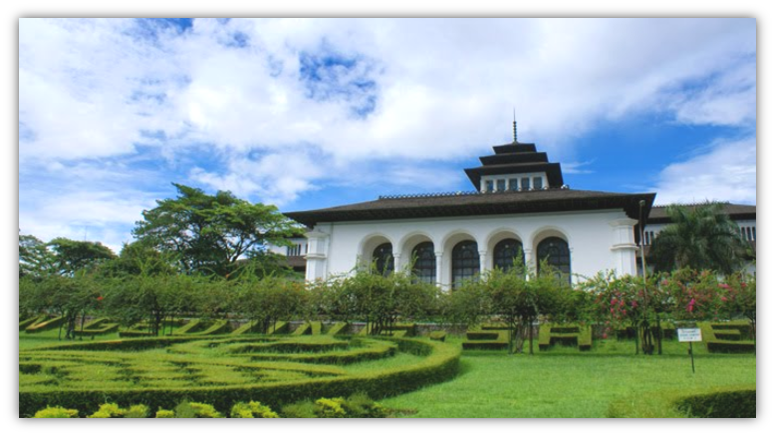
Bandung is the capital of West Java Province, and boasts a population of around 7.4 million people.  Surrounded by mountains, and sitting at almost eight hundred meters above sea-level, the city's climate is generally more comfortable than that found in coastal cities across the Indonesian archipelago.

Just two hours away from Jakarta, Bandung is known as a getaway destination for residents of Indonesia's capital.  This was true even during colonial times, when Bandung frequently entertained Dutch administrators and plantation owners from Jakarta and the rest of West Java.

In 1955, Bandung hosted the Asia-Africa Conference.  Attended by leaders of Asian and African countries, the conference was the first summit ever among many new nations that had just gained independence following the Second World War.

Indonesia's President Soekarno; India's Prime Minister Nehru; China's Premier Zhou Enlai; they were all there, and they voiced out their countries' respective nation-building processes, and efforts to establish peace, stability, and prosperity for the people.

The 1955 Asia-Africa Conference would later be known as the Bandung Conference.  And the spirit of solidarity and cooperation that was born out of that conference became known as the Bandung Spirit. 

That spirit continues to live on to this day, as Asia and Africa increasingly occupy the headlines of world news. 

Such a sense of solidarity is also reflected in the participation of many leaders, including Chinese President Xi Jinping, in the Bandung Conference's 60th anniversary commemoration, later this month. 

This is why I have chosen to speak about Bandung.

At the beginning of the millennium, beautiful Bandung, which was previously known as the Paris of Java, had gradually taken on many unappealing "big city" traits -- traffic jams, air pollution, and garbage. 

Bandung's urban problems can be traced to poor infrastructure and uncontrolled development.  The situation had become so damaging that many locals had succumbed to the possible irrelevance of Bandung in today's modern society.

However, things have changed for the better in the last few years. 

Bandung had always been known for its people's creativity and dynamism. And it was believed that any effort to make effective changes to the city would have to rely on these characteristics. 

In a city whose population is almost 50% made of youths, it is impossible to think of Bandung lacking in creativity and dynamism.

In 2008, Bandung launched a "creative city" movement, which was aimed at harnessing the pre-existing cultural and creative industry into a more organized city-level community.  The main aim was to inject new life into a supposedly fading city.  

As ideas emerged, interchanged, and further developed within conducive discourse environments, concrete efforts began to materialize on how to make the city more livable, and more lovable.  Some of the locals even dreamt of making Bandung a world class city. 

In this way, the desire to make Bandung more habitable had come from the grassroots, from the bottom up.  The city’s upward progress was therefore positively linked to the people's increasing enthusiasm and participation.

And in 2013, efforts to reinvigorate Bandung hit the next gear, when a young, foreign-educated, local architect by the name of Ridwan Kamil was elected as Mayor. 

Kamil had stated that his vision was "to make Bandung the happiest society in Indonesia".  And he has worked hard to fulfill his promise by listening to the people, and absorbing their ideas. 

The government has since pushed for better and more integrated public transportation.  This includes a cable car program and a bike-sharing program, which is the first of its kind in Indonesia.  This is targeted at making Bandung's streets less congested and less polluted.

The citizens of Bandung have also been encouraged to change their lifestyle.  And Mayor Kamil has tried to lead by example, as demonstrated by his frequent bike rides to work.

Creativity, the lifeline of Bandung’s progress, could only surface from lively surroundings.  Therefore, a mutual symbiosis needed to be created between the people and their home. 

In this regard, the government and people of Bandung emphasized on the idea of green development, by creating new parks, and revamping old ones. 

More public spaces have also been created, to stimulate positive interactions among the local population.  For example, areas under bridges, which had previously housed criminal activities, have been shifted into outdoor movie theaters and soccer pitches.

Moreover, to ensure the sustainability of this movement, citizens are asked to become directly involved in local projects. 

For example, to refurbish the city's soccer stadium area, a design competition was launched.  And the winner's design was then adopted as the blueprint for the project.  

In other words, the citizens are asked not to only demand a better life from the government, but also to be responsible for such improvement in livelihood.  The hope is that such public involvement  would cultivate a sense of belonging, thus ensuring sustainability.

Esteemed guests,
Ladies and gentlemen,

There are a number of factors that I would like to highlight in the way that Bandung has become a more livable and lovable city.

First, creativity.  Many of the changes happening in Bandung began with creative ideas. The development of forums for exchanging ideas among the local population has provided the energy for the city’s evolution.  

Second, participation.  The ability to express one’s mind has led to more Bandung people participating in public discussions.  In turn, the establishment of such forums has stimulated the emergence of new ideas, often among people who had previously been indifferent about the city's fate.

At the same time, creative ideas would only remain as ideas if the people are unwilling to convert them into concrete, tangible projects. 

This is where things are different now compared to before.  And this has much to do with a government and a leadership that is keen on materializing the people's ideas.

Therefore, third, attentive leadership.  Mayor Ridwan Kamil continues to interact with the public, not only by meeting them face-to-face, but also by making use of social media and the cyberspace. 

Through twitter, facebook, and instagram, Kamil can get first hand accounts of life in Bandung.  At the same time, Kamil uses these social media channels to report on the actions he has taken in response to popular aspirations and demands.

And fourth, a sense of belonging.  By allowing the public to participate in the governance of Bandung, a sense of responsibility has been nurtured.  This is something that is important in making the people more connected to their home, to their own livelihood.

Of course, in spite of the progress that I have outlined here, there remains much room for improvement if Bandung is to become a world-class city. 

However, if we speak to any people from Bandung today, then I can assure you that you would feel a strong sense of optimism oozing from them.  A sense of optimism in their capacity to make positive, long term changes.

History will always dictate Bandung as the capital of Asia-Africa.  But, by making Bandung a creative city, the local people have successfully breathe a new, reinvigorated life into their beloved city.  

In doing so, Bandung, like the Asian-African cooperation, have progressively changed with the times.