On 17 April 2015, I was invited by The Global Times, one of China's leading English-language newspapers, to speak at their annual Global Ambassador Forum. Of course I was delighted to receive the invitation, especially because I am not ambassador. So, I accepted the invitation in a heartbeat.

The words of that senior colleague do make sense. At least, more so than the advise of another older diplomat, who once belittled me, and said that I shouldn't speak at a forum promoting Indonesia's movie industry because I "didn't have the competency to speak about such matters". What nonsense, I thought, and still do 'til this day.
I will take the risk of appearing cocky and assert the believe that I am an authority in Indonesian matters, here in Beijing, China. And this is not simply because I've entertained one too many questions from Chinese people about things Indonesian. If anything, I believe that every diplomat should have it in his hearts and minds that he or she is an Indonesian resource person wherever they are posted. Not only competent, but an authority on Indonesia.
And so, it didn't take long for me to decide on Bandung as my topic of discussion for the Global Ambassador Forum. The choice was somewhat easy. I've been to Bandung many times. Bandung is increasingly becoming known for its "smart" and "green" urban development. Bandung was also about to host the 60th Anniversary of the Asia-Africa Summit, and many in Beijing knew little about Bandung.
Indeed, following the forum, I was interviewed by three Chinese media that wanted to do a background story for the Asia-Africa Summit. In fact, one of the publications resulting from these interviews can still be found on the website of East China News Service (ECNS.COM).
In case some of you are interested in what I said during the Global Ambassador Forum, please continue reading below.
-----
Excellencies Ambassadors,
Respected members of the diplomatic corps,
Esteemed editors and journalists of Global Times,
Ladies and gentlemen,
First and foremost, I would like to thank Global Times for inviting me to speak at this forum.
I am a loyal reader of Global Times, and therefore, it is indeed an honour for me to be here, and to talk about my country, Indonesia.
In all honesty, I am not an expert in urban development. Nor am I an architect or landscape designer. So I am not going to speak to you in jargons that I myself don't even understand.
But as a diplomat, I do get to travel, and feel the heartbeat of many cities. From my experience, every city has its own, unique life. And each city’s life is always evolving along with its population.
In this vein, today I would like to talk about Bandung, which is Indonesia's third largest city, after Jakarta and Surabaya.
Just two hours away from Jakarta, Bandung is known as a getaway destination for residents of Indonesia's capital. This was true even during colonial times, when Bandung frequently entertained Dutch administrators and plantation owners from Jakarta and the rest of West Java.
 In 1955, Bandung hosted
the Asia-Africa Conference. Attended by
leaders of Asian and African countries, the conference was the first summit
ever among many new nations that had just gained independence following the
Second World War.
In 1955, Bandung hosted
the Asia-Africa Conference. Attended by
leaders of Asian and African countries, the conference was the first summit
ever among many new nations that had just gained independence following the
Second World War.Indonesia's President Soekarno; India's Prime Minister Nehru; China's Premier Zhou Enlai; they were all there, and they voiced out their countries' respective nation-building processes, and efforts to establish peace, stability, and prosperity for the people.
The 1955 Asia-Africa Conference would later be known as the Bandung Conference. And the spirit of solidarity and cooperation that was born out of that conference became known as the Bandung Spirit.
That spirit continues to live on to this day, as Asia and Africa increasingly occupy the headlines of world news.
Such a sense of solidarity is also reflected in the participation of many leaders, including Chinese President Xi Jinping, in the Bandung Conference's 60th anniversary commemoration, later this month.
This is why I have chosen to speak about Bandung.
 At the beginning of the
millennium, beautiful Bandung, which was previously known as the Paris of Java,
had gradually taken on many unappealing "big city" traits -- traffic
jams, air pollution, and garbage.
At the beginning of the
millennium, beautiful Bandung, which was previously known as the Paris of Java,
had gradually taken on many unappealing "big city" traits -- traffic
jams, air pollution, and garbage. Bandung's urban problems can be traced to poor infrastructure and uncontrolled development. The situation had become so damaging that many locals had succumbed to the possible irrelevance of Bandung in today's modern society.
However, things have changed for the better in the last few years.
Bandung had always been known for its people's creativity and dynamism. And it was believed that any effort to make effective changes to the city would have to rely on these characteristics.
In a city whose population is almost 50% made of youths, it is impossible to think of Bandung lacking in creativity and dynamism.
In 2008, Bandung launched a "creative city" movement, which was aimed at harnessing the pre-existing cultural and creative industry into a more organized city-level community. The main aim was to inject new life into a supposedly fading city.

In this way, the desire to make Bandung more habitable had come from the grassroots, from the bottom up. The city’s upward progress was therefore positively linked to the people's increasing enthusiasm and participation.
And in 2013, efforts to reinvigorate Bandung hit the next gear, when a young, foreign-educated, local architect by the name of Ridwan Kamil was elected as Mayor.
Kamil had stated that his vision was "to make Bandung the happiest society in Indonesia". And he has worked hard to fulfill his promise by listening to the people, and absorbing their ideas.
The government has since pushed for better and more integrated public transportation. This includes a cable car program and a bike-sharing program, which is the first of its kind in Indonesia. This is targeted at making Bandung's streets less congested and less polluted.
 The citizens of Bandung
have also been encouraged to change their lifestyle. And Mayor Kamil has tried to lead by example,
as demonstrated by his frequent bike rides to work.
The citizens of Bandung
have also been encouraged to change their lifestyle. And Mayor Kamil has tried to lead by example,
as demonstrated by his frequent bike rides to work.Creativity, the lifeline of Bandung’s progress, could only surface from lively surroundings. Therefore, a mutual symbiosis needed to be created between the people and their home.
In this regard, the government and people of Bandung emphasized on the idea of green development, by creating new parks, and revamping old ones.
More public spaces have also been created, to stimulate positive interactions among the local population. For example, areas under bridges, which had previously housed criminal activities, have been shifted into outdoor movie theaters and soccer pitches.
Moreover, to ensure the sustainability of this movement, citizens are asked to become directly involved in local projects.

In other words, the citizens are asked not to only demand a better life from the government, but also to be responsible for such improvement in livelihood. The hope is that such public involvement would cultivate a sense of belonging, thus ensuring sustainability.
Esteemed guests,
Ladies and gentlemen,
There are a number of factors that I would like to highlight in the way that Bandung has become a more livable and lovable city.
First, creativity. Many of the changes happening in Bandung began with creative ideas. The development of forums for exchanging ideas among the local population has provided the energy for the city’s evolution.
Second, participation. The ability to express one’s mind has led to more Bandung people participating in public discussions. In turn, the establishment of such forums has stimulated the emergence of new ideas, often among people who had previously been indifferent about the city's fate.
At the same time, creative ideas would only remain as ideas if the people are unwilling to convert them into concrete, tangible projects.
This is where things are different now compared to before. And this has much to do with a government and a leadership that is keen on materializing the people's ideas.
Therefore, third, attentive leadership. Mayor Ridwan Kamil continues to interact with the public, not only by meeting them face-to-face, but also by making use of social media and the cyberspace.
Through twitter, facebook, and instagram, Kamil can get first hand accounts of life in Bandung. At the same time, Kamil uses these social media channels to report on the actions he has taken in response to popular aspirations and demands.
And fourth, a sense of belonging. By allowing the public to participate in the governance of Bandung, a sense of responsibility has been nurtured. This is something that is important in making the people more connected to their home, to their own livelihood.
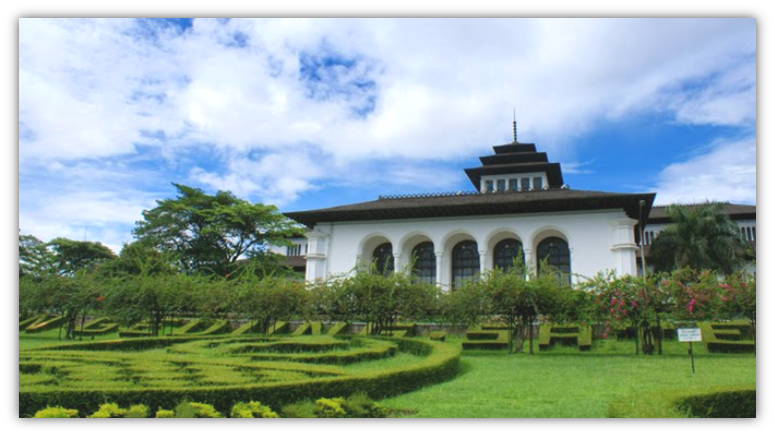
However, if we speak to any people from Bandung today, then I can assure you that you would feel a strong sense of optimism oozing from them. A sense of optimism in their capacity to make positive, long term changes.
History will always dictate Bandung as the capital of Asia-Africa. But, by making Bandung a creative city, the local people have successfully breathe a new, reinvigorated life into their beloved city.
In doing so, Bandung, like the Asian-African cooperation, have progressively changed with the times.


